

What You Need to Know: Useful Information
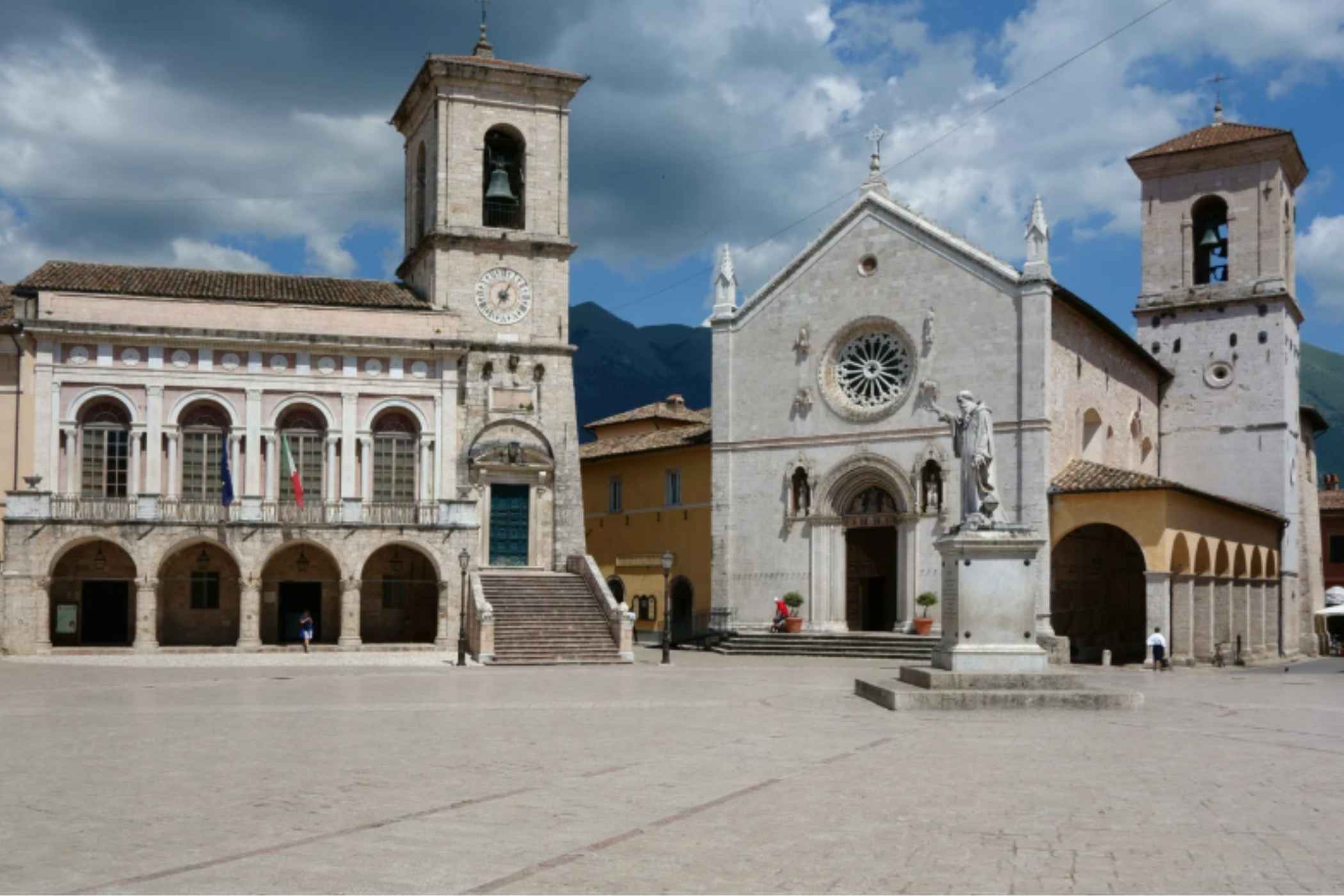
The Way of St. Benedict is a 300-kilometer route that stretches from Norcia, near the Sibillini Mountains, to Cassino in the Liri Valley, passing through the upper Aniene Valley and Subiaco. The route has 16 stages and navigates paths, cart tracks, and low-traffic roads through the valleys and mountains of Umbria and Lazio. The journey explores key locations related to St. Benedict of Norcia and other saints, including Rita of Cascia, Francis of Assisi, and Thomas Aquinas, as well as lesser-known figures like Joseph of Leonessa and Agostina Pietrantoni. This route offers a unique experience because it combines history, spirituality, and nature in a lesser-known but incredibly beautiful part of Italy, far from mass tourism. Walking or cycling slowly allows you to discover unspoiled landscapes, authentic villages, and profound religious sites, making it a special opportunity for those seeking intense contact with the territory and their inner selves.
Getting There
By train
Because this long-distance pilgrimage crosses through multiple rugged mountain ranges, accessing the main starting point requires heading to regional hubs. You can take a mainline train to Spoleto railway station or Terni railway station. From either of these major urban rail terminals, you will need to catch a connecting regional bus to ride up into the Apennines toward Norcia.
By car
Driving allows you to reach specific trailheads along the 16-stage path at your own pace. To arrive at the northern trailhead, take the A1 highway or the E45 highway toward Spoleto, then exit and follow the scenic SS209 Valnerina highway and the SP477 directly through the mountains to Norcia.
By bus
For regional transit travelers, daily Busitalia Umbria regional buses connect the train station at Spoleto directly to the historic center of Norcia. For later stages of the trail in Lazio, regional COTRAL buses run regular lines linking Rome and Tivoli directly to Subiaco and Cassino.
Below you'll find the location marked on Google Maps. Click on it to open the location directly on your device's maps.
Useful contacts
- Associazione Amici del Cammino di San Benedetto (Official Trail & Pilgrim Information Office): +39 334 329 1982 | [email protected] | camminodisanbenedetto.it
What to Bring & Pro Tips
- Because the Way of St. Benedict requires good physical and mental preparation, it is absolutely critical to map out your stops in advance and check local trail conditions since the walk is challenging, with long stages and isolated sections.
- For this reason, it is essential to be adequately equipped: wear high-traction hiking boots or use a suitable mountain/gravel bicycle, dress in layered technical clothing to handle sudden mountain weather changes, and carry a lightweight but functional backpack stocked with plenty of water, high-energy snacks, and a first aid kit.
- Remember to secure an official Pilgrim’s Credential card online before departing, which grants you access to special hospitality rates at local monasteries. Lastly, pay close attention to water fountain locations on your maps, as natural water sources can become quite scarce during the high mountain ascents.
The “Hidden Gem”
Once you have trekked past the major basilicas and walked the quiet valleys, leave the main road behind near the Subiaco stages to discover the breathtaking, cliff-clinging Monastero di San Benedetto (Sacro Speco).
Instead of looking at a traditional, freestanding cathedral, this spectacular medieval sanctuary is a masterpiece of architectural daring, built directly against a sheer rock wall overhanging a dramatic gorge. It completely envelops the holy cave where a young St. Francis-era St. Benedict lived as a hermit for three years. Walking inside the sanctuary reveals a labyrinth of stone chapels, spiral stairs, and stunning 13th-century frescoes that are painted directly onto the living mountain bedrock. It offers a wonderfully mystical, awe-inspiring break from the long outdoor hiking stages, rewarding dedicated pilgrims with one of the most spiritually profound and visually stunning religious sites hidden anywhere in western Europe.
