

What You Need to Know: Useful Information
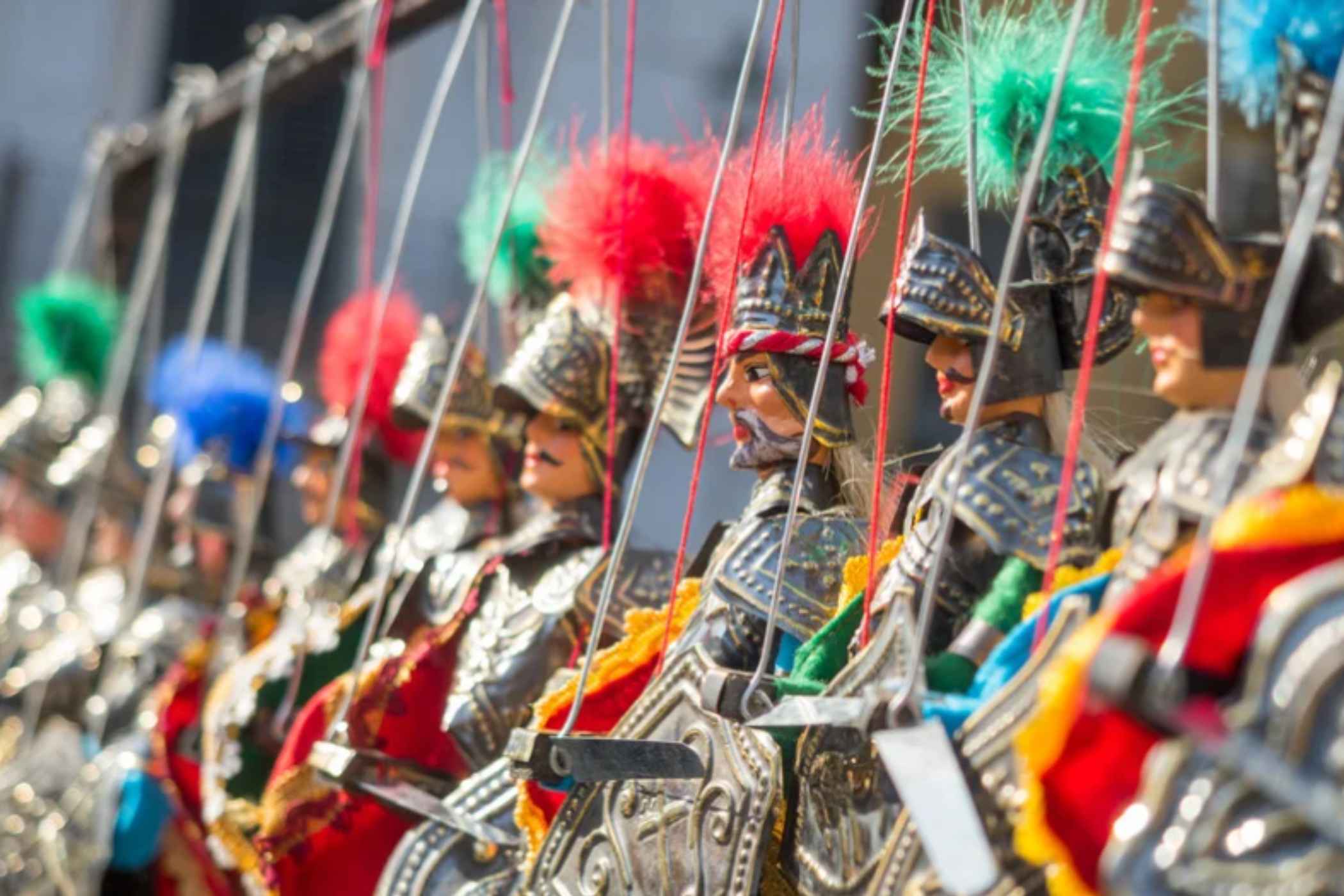
“Pupi Siciliani” are traditional marionettes, protagonists of the Opera dei Pupi, a form of popular theater that originated in Sicily in the 19th century and is recognized by UNESCO as an intangible cultural heritage of humanity. These puppets represent chivalrous heroes, especially characters from the Carolingian cycle such as Orlando, Rinaldo, and Charlemagne, and tell stories of battles, love, and honor. The history of Sicilian puppets has its roots in medieval tradition and is linked to a strong popular culture, originally created as entertainment for the people.
The uniqueness of Sicilian puppets lies in their structure and the technique used to manipulate them: they are not moved by strings, like classic marionettes, but by rods that the puppeteer moves behind the stage backdrop. This allows for precise and dynamic movements, bringing the performances to life with action and intensity. The puppeteer is also the narrator and the voice of all the characters, creating lively and engaging dialogues, often improvised during the performance. The puppets are made from materials such as wood, metal, and fabric, and are decorated with great attention to detail in their armor, clothing, and weapons. This theater has survived over the centuries thanks to the passion of puppeteers who have handed down the techniques of construction and acting from generation to generation.
Getting There
By train
To reach the historic theatrical districts of Sicily by rail, you can take a regional Trenitalia train directly to the main stations of Palermo Centrale or Catania Centrale. These central hubs put you within easy walking distance or a short public transit ride of the historic markets and old neighborhoods where traditional puppet theaters and workshops operate.
By car
Driving is an excellent option for exploring both the coastal cities and the smaller towns with deep puppetry roots. From Messina, you can take the A18 highway southbound toward Catania, or follow the A19 highway crossing west straight into Palermo, where paid public parking areas are available right outside the historic pedestrian zones.
By bus
For regional public transit travelers, long-distance and intercity bus lines operated by networks like SAIS Autolinee and Interbus connect major Sicilian airports and coastal cities directly to the historic municipal centers. These buses drop passengers off at central transport terminals, making the artisan workshops highly accessible.
Below you'll find the locations marked on Google Maps. Click on them to open the locations directly on your device's maps.
Useful Contacts
- Museo Internazionale delle Marionette Antonio Pasqualino (International Puppet Museum in Palermo):
- Website: museodellemarionette.it
- Fratelli Napoli – Antica Bottega del Teatro dei Pupi (Historic Catania Workshop & Theater):
- Website: fratellinapoli.it
- Sicilia Turismo (Sicily Regional Tourism Board Portal):
- Website: visitsicily.info
What to Bring & Pro Tips
- Secure your workshop booking online well ahead of your trip, as many artisan workshops offer a unique opportunity to discover the secrets of craftsmanship and painting up close.
- Bring a smartphone or a camera to capture the incredible, hand-painted details added by the master artisan to the custom armor, clothing, and weapons.
- Wear comfortable, casual clothing that you do not mind getting slightly dirty, as you might work directly with raw wood shavings, metal polishes, or paints during the building phase.
- Pay close attention during the manipulation practice, as learning how to move the puppets by their iron rods to bring them to life in perfect scenes takes patience and a steady hand.
- Keep an open schedule to see a live Sicilian puppet show during your visit, as it is an authentic and engaging experience that brings you into direct contact with a living tradition.
- Save some budget and space in your luggage to purchase a small, handmade traditional puppet to take home as a tangible, culturally rich souvenir of your journey.
The “Hidden Gem”
Once you have finished learning how to manipulate the iron rods of the chivalrous heroes and exploring the artisan workshops, take a short walk to discover the Church of Santa Maria dello Spasimo in Palermo.
Instead of staying entirely focused on the bustling theater alleys, head to the historic Kalsa quarter to explore one of the most evocative and hauntingly beautiful architectural sites in Sicily. Started in the early 16th century but never fully completed, this grand Gothic-Renaissance church completely lacks a roof. Today, walking down its sweeping, open-air nave allows you to look straight up into the blue Sicilian sky, while a massive, historic olive tree has grown directly out of the stone floor where the altar should be. Used today as an atmospheric cultural space for open-air jazz concerts and artistic events, stepping into this quiet, sun-drenched stone sanctuary offers a wonderfully poetic and peaceful break, rewarding travelers with a look at a monument where nature and architecture have lived in perfect harmony for centuries.
