

What You Need to Know: Useful Information
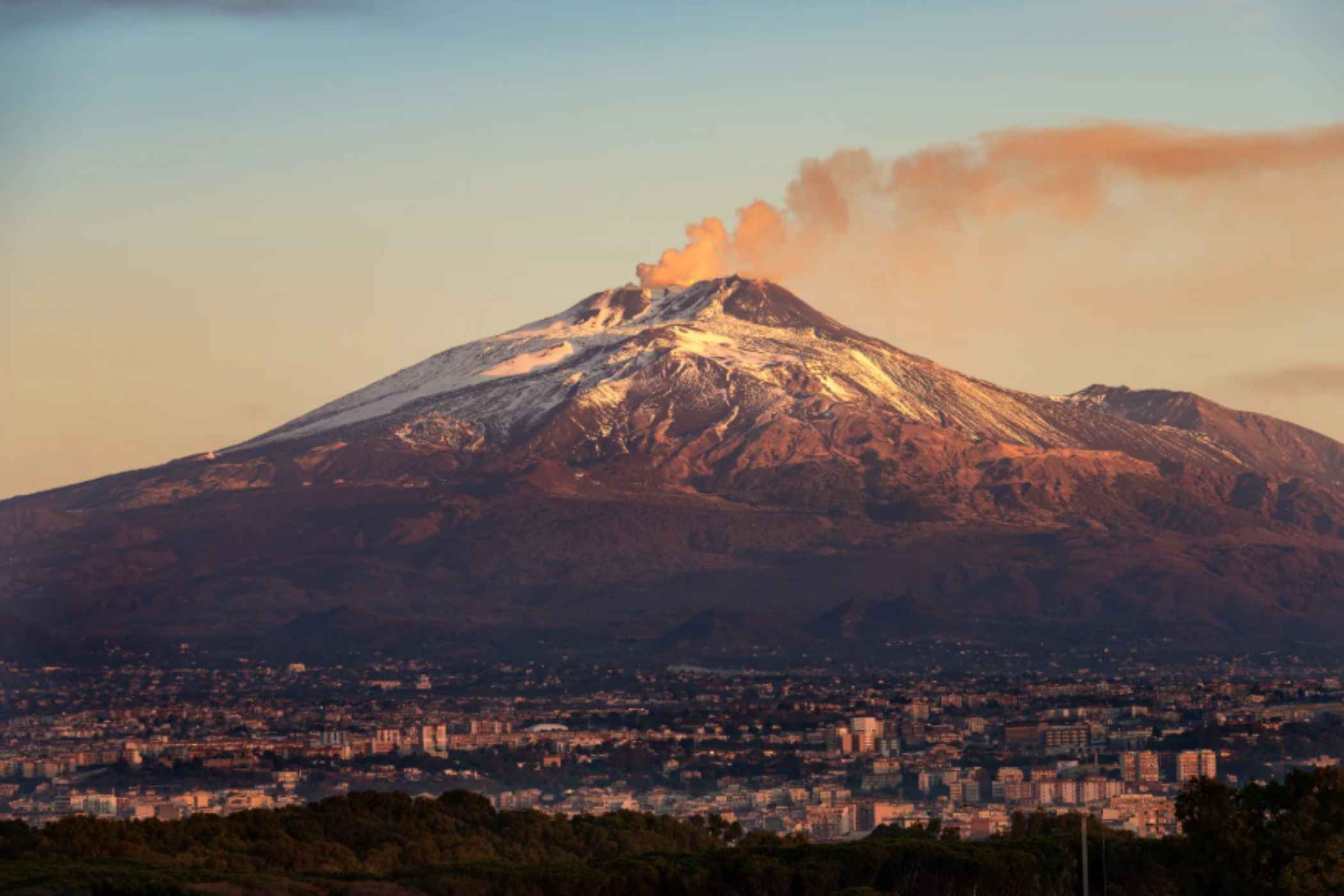
The Littorina Etnea is a very picturesque train journey that runs along the Circumetnea Railway, a narrow-gauge railway line that circles Mount Etna, Europe's highest active volcano. This route allows you to admire completely unique landscapes, seamlessly blending lush nature, historic villages, and dramatic volcanic views.
The name “Littorina” itself derives from the specific railcars originally used on the tracks, which were called by this name. Today, the term is used colloquially to refer to the entire journey on the Circumetnea Railway, which originates in Catania and extends all the way to Riposto, passing through various towns in the Etna area. The complete route starts in Paternò and arrives in Riposto, passing through towns such as Adrano, Bronte, Randazzo, and Giarre. The journey takes about three and a half hours, offering spectacular views of the volcano and the surrounding areas. An interesting feature is that the railway follows a continuous loop around Mount Etna, allowing you to discover not only nature but also local traditions and typical Sicilian products.
Getting There
By train
To reach the starting line by rail, you can take a regional or high-speed Trenitalia train directly to the main Catania Centrale railway station. From there, you can easily transfer to the dedicated Ferrovia Circumetnea (FCE) terminal station, Catania Borgo, which connects you directly to the narrow-gauge trains servicing the volcanic loop.
By car
Driving is an excellent option if you want to join the railway route at one of its major intermediate stops. From Catania, take the A18 Catania-Messina highway northbound, or use the SS121 state road moving west to quickly reach the primary starting station of Paternò or nearby Adrano.
By bus
For regional public transit travelers, the Ferrovia Circumetnea company operates its own extensive network of local buses alongside the tracks. These buses depart regularly from central Catania and stop at the main town squares of Paternò, Bronte, and Randazzo, making the railway line highly accessible.
Below you'll find the location marked on Google Maps. Click on it to open the location directly on your device's maps.
Useful Contacts
- Ferrovia Circumetnea – FCE (Official Train Timetables & Ticket Booking):
- Website: circumetnea.it
- Ente Parco dell'Etna (Mount Etna National Park Authority):
- Website: parcoetna.it
- Sicilia Turismo (Sicily Regional Tourism Board Portal):
- Website: visitsicily.info
What to Bring & Pro Tips
- Check the train schedules carefully before setting out, keeping in mind that the full scenic loop from Paternò to Riposto takes about three and a half hours to complete.
- Bring a smartphone or a camera with plenty of battery to capture the spectacular, changing views of Europe's highest active volcano and the historic villages.
- Pack a light jacket or a sweater even during the warm summer months, as the train climbs into higher altitudes where mountain breezes can get chilly.
- Wear comfortable shoes if you plan to hop off at intermediate historic towns like Bronte or Randazzo to stretch your legs and explore the local streets.
- Keep an eye out the window as you travel to spot the diverse terrain, which transitions beautifully between cultivated countryside, deep chestnut woods, and old lava flows.
- Plan your stops to include a quick culinary break in the towns along the route, which gives you a fantastic opportunity to discover local traditions and typical Sicilian products, such as the famous pistachios of Bronte.
The “Hidden Gem”
Once you have completed your loop around the volcano and stepped off the train in the historic station of Randazzo, take a short walk to explore its spectacular historic center built entirely of black lava stone.
Instead of treating Randazzo as just a quick transit stop on your rail journey, spend an hour wandering through its medieval heart, which holds the unique title of being the closest town to the summit of Mount Etna. Remarkably, it is the only town that has completely escaped destruction from the volcano's eruptions throughout recorded history. The absolute highlight is the Basilica di Santa Maria Assunta, a stunning 13th-century church constructed completely out of dark, contrasting volcanic lava blocks with elegant white stone detailing. Walking through these quiet, shadow-filled medieval alleys—where the dark volcanic earth constitutes the very walls of the homes and palazzi—offers a wonderfully atmospheric and profound cultural break, rewarding travelers with a firsthand look at a town that has lived in perfect harmony with the sleeping giant for centuries.
