

What You Need to Know: Useful Information
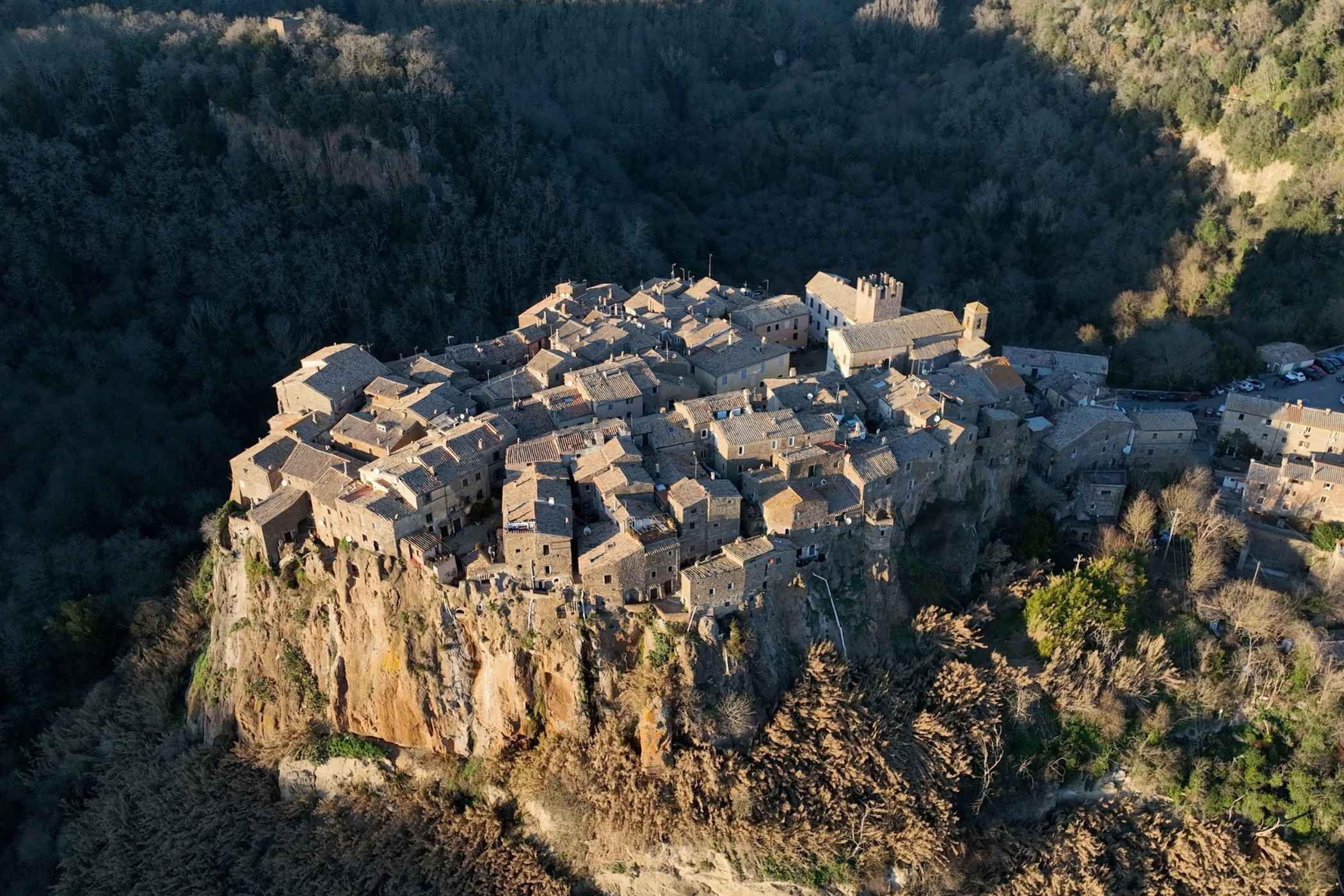
Near Rome, about 40 kilometers northwest, there is a little-known place with a unique charm: Calcata, the artists' village. This small medieval village, perched on a tuff spur in the province of Viterbo, is famous for its special atmosphere and the artistic community that has settled there in recent decades. Calcata attracted painters, sculptors, artisans, and creatives from Italy and abroad in the 1960s and 1970s. These artists have turned the village into an open-air workshop, decorating the old houses with murals and installations that create a visual experience in every corner. Calcata is famous for its vibrant cultural life, featuring exhibitions, events, and workshops that engage both visitors and residents. The village retains a timeless atmosphere thanks to its cobbled streets, ancient walls, and surrounding nature.
Getting There
By train
From Rome, you can take a regional train heading north to Civita Castellana railway station or Viterbo railway station. Once you arrive at either of these regional stops, you will need to transfer and catch a local bus to complete your journey up to the village.
By car
Driving from the capital allows you to easily reach the surrounding valley at your own pace. From Rome, take the A1 motorway north to the Orte exit, then simply follow the regional road signs directing you toward Viterbo and Calcata.
By bus
For public transit travelers departing directly from Rome, regional COTRAL buses run regular daily schedules from the Saxa Rubra transit hub straight to the entrance of Calcata Vecchia, bypassing the need for a train transfer.
Below you'll find the location marked on Google Maps. Click on it to open the location directly on your device's maps.
Useful Contacts
- Comune di Calcata – Ufficio Turistico (Calcata Municipal Visitor Desk): +39 0761 587021 | [email protected]
What to Bring & Pro Tips
- Because the village is perched on a dramatic tuff spur and completely closed to non-resident vehicles, you will need to park your vehicle outside the historic center and explore on foot.
- Ensure you wear comfortable walking shoes or sneakers with excellent traction to safely navigate the steep, historic cobbled streets.
- If you plan to explore the surrounding nature, the Valle del Treja Regional Park features excellent hiking trails and beautiful natural scenery, so packing a reusable water bottle and light sportswear is highly recommended.
- Bring a camera to capture the unique murals, art installations, and breathtaking views over the gorge.
- Carry some cash with you, as the thick volcanic stone walls inside the ancient village often block cell service, occasionally making card payments at small artisan workshops temporarily unavailable.
The “Hidden Gem”
Once you have explored the artisan studios in the village center, slip past the ancient walls and hike down into the valley to discover the magical Cascate di Monte Gelato (Monte Gelato Waterfalls).
Instead of looking at standard city fountains, take a short trip into the heart of the Valle del Treja Regional Park to find these spectacular, multi-tiered natural waterfalls. Shaded by a dense canopy of lush trees, the rushing river tumbles over smooth volcanic rock formations right next to a beautifully preserved 19th-century watermill and the historic ruins of a medieval tower. This incredibly atmospheric setting is so visually striking that it has served as a filming location for dozens of classic Italian and international movies. Walking along the wooden footpaths and listening to the sound of the cascading water offers a wonderfully cool, peaceful break from the village walking tours, rewarding nature lovers with an unforgettable taste of Lazio's wild river valleys.
