

What You Need to Know: Useful Information
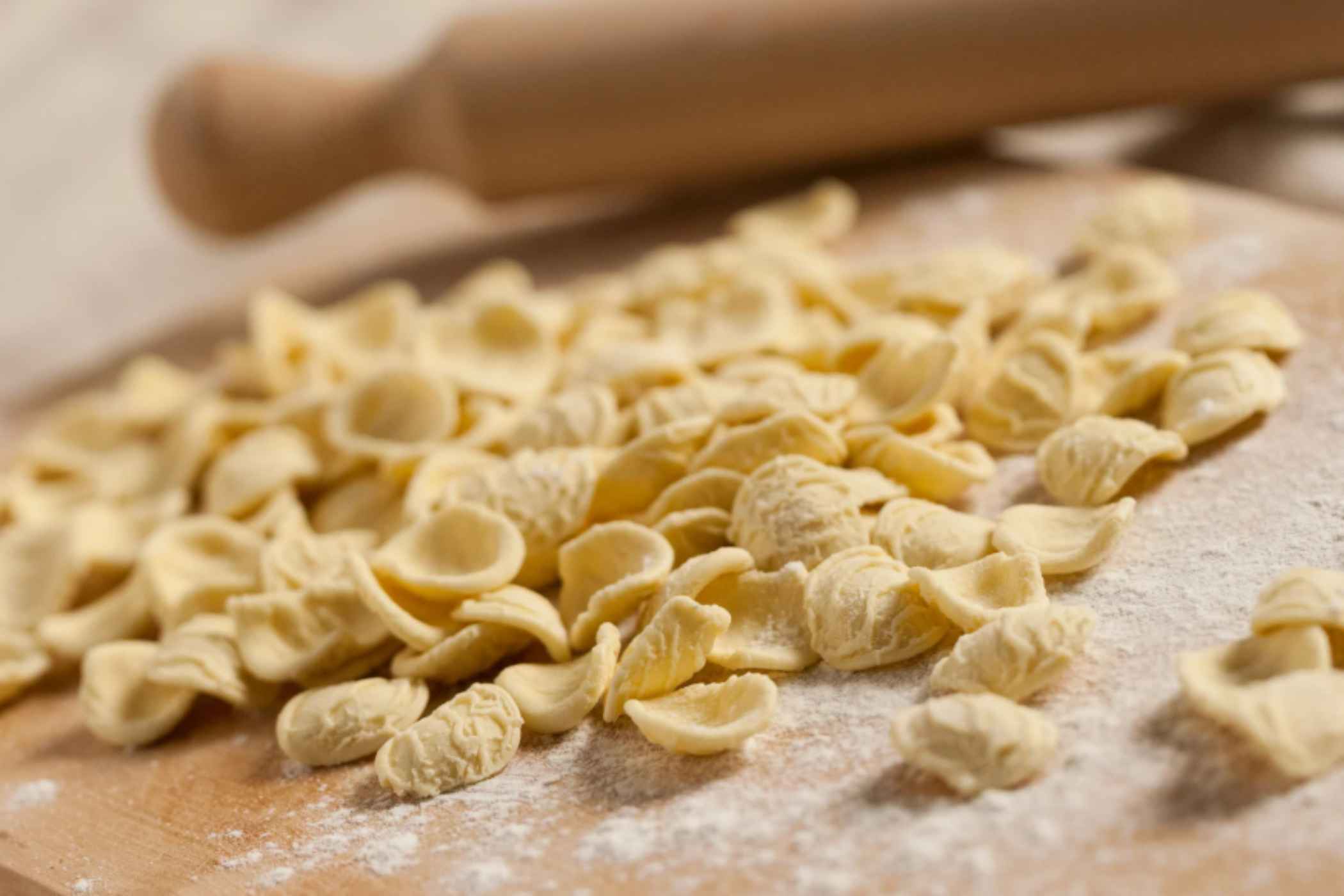
Orecchiette pugliesi are a type of fresh pasta typical of the Puglia region, famous for their characteristic “orecchietta” shape, which resembles a small ear. This particular shape allows the sauce to cling to the pasta, making the final dish exceptionally tasty and full of flavor. They stand as a proud symbol of Puglia's culinary tradition and represent a deep connection with local culture and history.
The preparation of orecchiette is an ancient art that requires patience and manual skill. The dough itself is simple, made with durum wheat flour and water, entirely without the addition of eggs. After kneading the dough until it becomes elastic, a small piece of dough is detached, pressed with the thumb on a pastry board, and pulled slightly towards oneself to obtain the typical concave shape. This seemingly simple gesture requires a lot of practice to obtain regular, well-formed orecchiette. Taking part in an orecchiette workshop in Puglia is a wonderful and engaging experience. In these courses, you have the unique opportunity to learn directly from local cooks or expert “nonne” (grandmothers) who preserve this tradition.
Getting There
By train
To reach the vibrant historic towns where pasta traditions thrive, you can take a high-speed Frecciarossa train directly to the Bari Centrale railway station. From Bari, local regional trains connect smoothly to nearby culinary hotspots like Conversano, Polignano a Mare, or Gioia del Colle, placing you within easy walking distance of traditional kitchens.
By car
Driving is an excellent way to reach rural masserie (fortified farmhouses) that host cooking schools. From the north, take the A14 Bologna-Taranto highway down the Adriatic coast and exit at Bari, Monopoli, or Taranto depending on your workshop location, following local state roads directly to the countryside estates.
By bus
For regional public transit travelers, local intercity buses connect major coastal cities directly to smaller agricultural inland communities. These buses drop passengers off at central municipal squares, making neighborhood cooking workshops easily accessible.
Below you'll find the location marked on Google Maps. Click on it to open the location directly on your device's maps.
Useful Contacts
- Viaggiare in Puglia (Official Puglia Regional Tourism Board):
- Website: viaggiareinpuglia.it
- Accademia della Cucina Pugliese (Apulian Culinary Academy Directory):
- Website: accademicacucinapugliese.it
- Consorzio Puglia in Tavola (Apulian Gastronomic Culture Network):
- Website: pugliaintavola.org
What to Bring & Pro Tips
- Secure your spot in an orecchiette workshop ahead of time, as these hands-on cooking classes keep group sizes small to give everyone space around the wooden pastry boards.
- Dress in comfortable, casual clothing that you don't mind getting lightly dusted with durum wheat flour.
- Remove all rings, bracelets, and wristwatches before the session starts, as you will need completely bare hands to knead the dough until it becomes elastic.
- Bring a smartphone or a camera to capture the specific thumb-pressing and pulling techniques demonstrated by the expert “nonne”.
- Wear flat, supportive footwear with good traction, as kitchen and stone farmhouse floors can sometimes get slick when dusted with fine flour.
- Pack a light appetite for the class, because these practical courses conclude with you tasting the delicious pasta dishes you have prepared with your own hands.
The “Hidden Gem”
Once you have mastered the thumb-and-pull technique on the pastry board and tasted your fresh pasta, take a short drive to explore the ancient Grotte di Castellana (Castellana Caves).
Instead of staying entirely in the kitchen or heading straight to the beaches, travel to the limestone valley of the Murge to discover Italy's most spectacular subterranean cave system. Paths wind down into a stunning underground world of vast caverns, deep canyons, and incredible stalactite and stalagmite formations that have grown over millions of years. The absolute highlight of the tour is the Grotta Bianca (White Cave), universally praised as one of the most beautiful and shining alabaster caves in the world. Walking through these cool, quiet underground chambers offers a wonderfully refreshing and awe-inspiring natural contrast to the warm, bustling culinary atmosphere of the traditional Apulian kitchens.
