

What You Need to Know: Useful Information
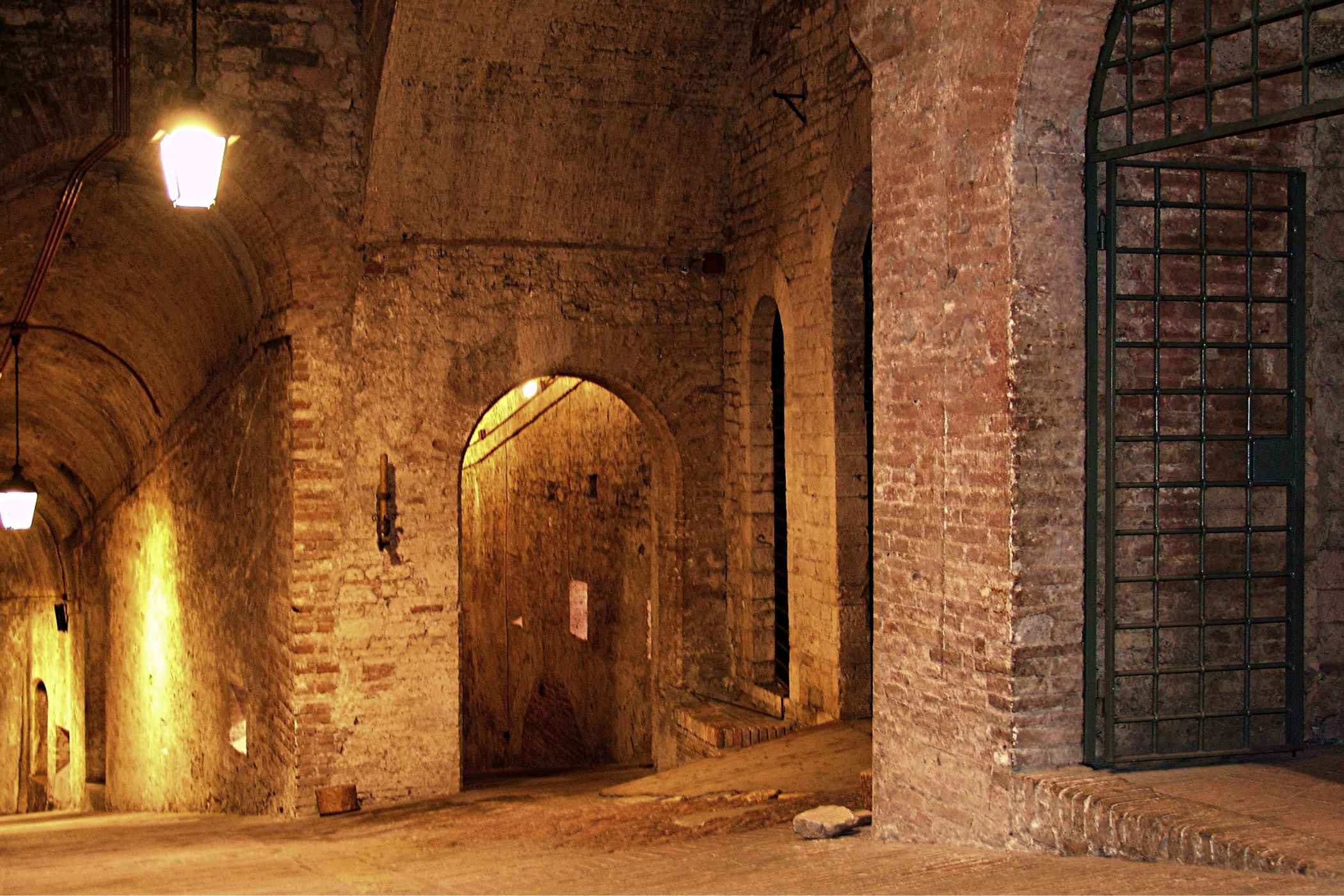
The Etruscan Well of Perugia, also known as “Pozzo Sorbello” after the noble family that still owns the palace that houses the structure, is one of the city's most important and evocative monuments. Located in the historic center, beneath Palazzo Sorbello, it is a remarkable example of Etruscan hydraulic engineering from the 3rd century BC. The well is about 37 meters deep and has a diameter of about 3 meters after an internal constriction. It was skillfully carved into the rock to provide a steady supply of drinking water to the ancient city of Perugia, situated above the well's location. This structure is fed by three perennial water sources, which ensured supply even during periods of drought. The well features a spiral staircase carved into the rock, allowing visitors to descend to the water level, while the interior walls are lined with perfectly fitted stone blocks, a sign of the technical skill of the Etruscans. In 2015, major restoration work was completed on the top of the well, making it safe for visitors. Today, the Etruscan Well in Perugia is open to the public as a museum and is a must-see for anyone wanting to explore the history of Etruscan civilization.
Getting There
By train
The city center is well-connected by rail; you can take a regional or Frecciarossa train directly to Perugia Fontivegge railway station. From the station, the easiest and most scenic way to reach the hilltop historic center is by boarding the automated Minimetrò and getting off at the Pincetto stop, which is just a short walk away from the well.
By car
Driving to this historic hill town requires navigating around the restricted traffic zones (ZTL). Take the E45 highway and exit at Perugia San Faustino or Perugia Prepo, following signs toward the central parking garages like Parcheggio Saba Piazza Partigiani. From the garage, an efficient system of indoor escalators will take you directly up into the historic center.
By bus
For regional transit travelers, Busitalia Umbria operates frequent daily bus lines connecting nearby towns like Assisi, Foligno, and Todi directly to the Piazza Partigiani bus terminal in Perugia, putting you within easy reach of the city's ancient monuments.
Below you'll find the location marked on Google Maps. Click on it to open the location directly on your device's maps.
Useful contacts
- Pozzo Etrusco – Palazzo Sorbello Fondazione (Official Well Museum Office): +39 075 573 3669 | [email protected] | pozzoetrusco.it
- IAT Perugia – Ufficio Informazioni Turistiche (Perugia Tourist Information Center): +39 075 573 6458 | [email protected]
What to Bring & Pro Tips
- Because the Etruscan Well in Perugia is open to the public as a museum, checking their daily operating timetables before your arrival is highly recommended.
- The underground layout features a spiral staircase carved into the rock that can get damp and slick from the subterranean moisture; make sure to wear flat, sturdy walking shoes with excellent traction to descend safely.
- Since you will be descending about 37 meters deep beneath the Palazzo Sorbello, the temperature drops noticeably compared to the surface, so packing a light jacket or sweater is a smart idea.
- Remember to bring a camera with good low-light capabilities so you can capture the perfectly fitted stone blocks without relying on a harsh flash that washes out the ancient engineering details.
The “Hidden Gem”:
Once you have stepped back above ground from the depths of the 3rd century BC well, leave the main squares behind and take a walk down the steps to explore the stunning, medieval Via dell'Acquedotto.
Instead of looking at a standard modern street, this hidden gem is a spectacular 13th-century stone aqueduct that was originally built to carry water across the valley from Mount Pacciano straight to the Fontana Maggiore. Centuries later, the top of the massive arched bridge was converted into a unique, narrow pedestrian walkway lined with colorful historic houses. Walking along this suspended, cobblestone bridge offers a wonderfully scenic, architectural break from the standard city viewpoints, rewarding travelers with one of the most picturesque, old-world corridors hidden anywhere in Umbria.
