

What You Need to Know: Useful Information
The Ferrovia dei Parchi, also known as the Transiberiana d'Abruzzo, is a scenic tourist railway that travels through the beautiful mountains of Abruzzo and Molise in the central Apennines. The line begins in Sulmona, an ancient town in Abruzzo, and ends in Isernia, covering around 128 kilometers of pristine nature. It includes 58 tunnels and over 100 engineering structures that highlight the railway's historical and technical significance, winding through valleys, woods, rivers, and mountains. Interesting stops along the way include Campo di Giove, a mountain resort known for nature and sports tourism, and Castel di Sangro, a cultural and historical landmark. The historic train features vintage carriages that let passengers experience the charm of the past. Far from a simple rail journey, it is a complete tourist experience where you can get off at stations for hiking or cultural visits, alongside organized special events like markets, food and wine tours, and themed events. This trip allows you to fully immerse yourself in the unspoiled nature of the Apennines and discover small, authentic villages far from mass tourism.
Getting There
By train
To catch the start of the journey by rail, you can take a regional Trenitalia train directly to Sulmona railway station, which is a major rail junction in Abruzzo well-connected to Pescara, L'Aquila, and Rome. If you prefer to board from the southern terminus, a regional train will take you straight to Isernia railway station, which is easily reached via direct lines from places like Naples, Campobasso, and Rome.
By car
If you plan on driving to the northern departure point in Sulmona, take the A25 highway (Torano-Pescara), exit at Pratola Peligna – Sulmona, and follow the main road signs for a few minutes straight to the station parking areas. For those driving to the southern starting point in Isernia, take the A1 highway (Autostrada del Sole), exit at San Vittore if coming from the south or Caianello if coming from the north, and follow the SS85 highway directly to the town center.
By bus
For regional public transit travelers preferring this option, TUA (Trasporto Unico Abruzzese) operates frequent daily intercity routes that connect central L'Aquila and Pescara directly to Sulmona. Meanwhile, those traveling through Molise can rely on ATM (Azienda Trasporti Molisana) regular daily bus services, which link Campobasso and various local mountain communities straight to the main terminal in Isernia.
Below you'll find the location marked on Google Maps. Click on it to open the location directly on your device's maps.
Useful Contacts
- Ufficio Informazioni Turistiche Sulmona (Sulmona Welcome Desk): +39 0864 210216 | [email protected]
What to Bring & Pro Tips
- Because this journey is incredibly popular and features limited seasonal runs, it is highly advisable to book tickets in advance on the official website, especially during busy periods such as winter or the Christmas holidays when special departures are organized.
- The vintage carriages lack modern climate control, so dressing in adaptable layers is highly recommended to stay comfortable as the train climbs into the high-altitude mountain passes.
- If you plan to take advantage of the train stops for hiking or cultural visits, make sure to wear sturdy, comfortable walking shoes or hiking boots.
- Bring a camera or smartphone with a fast shutter speed to smoothly capture the stunning views through the openable windows as the train passes over the spectacular high-altitude stone viaducts.
The “Hidden Gem”
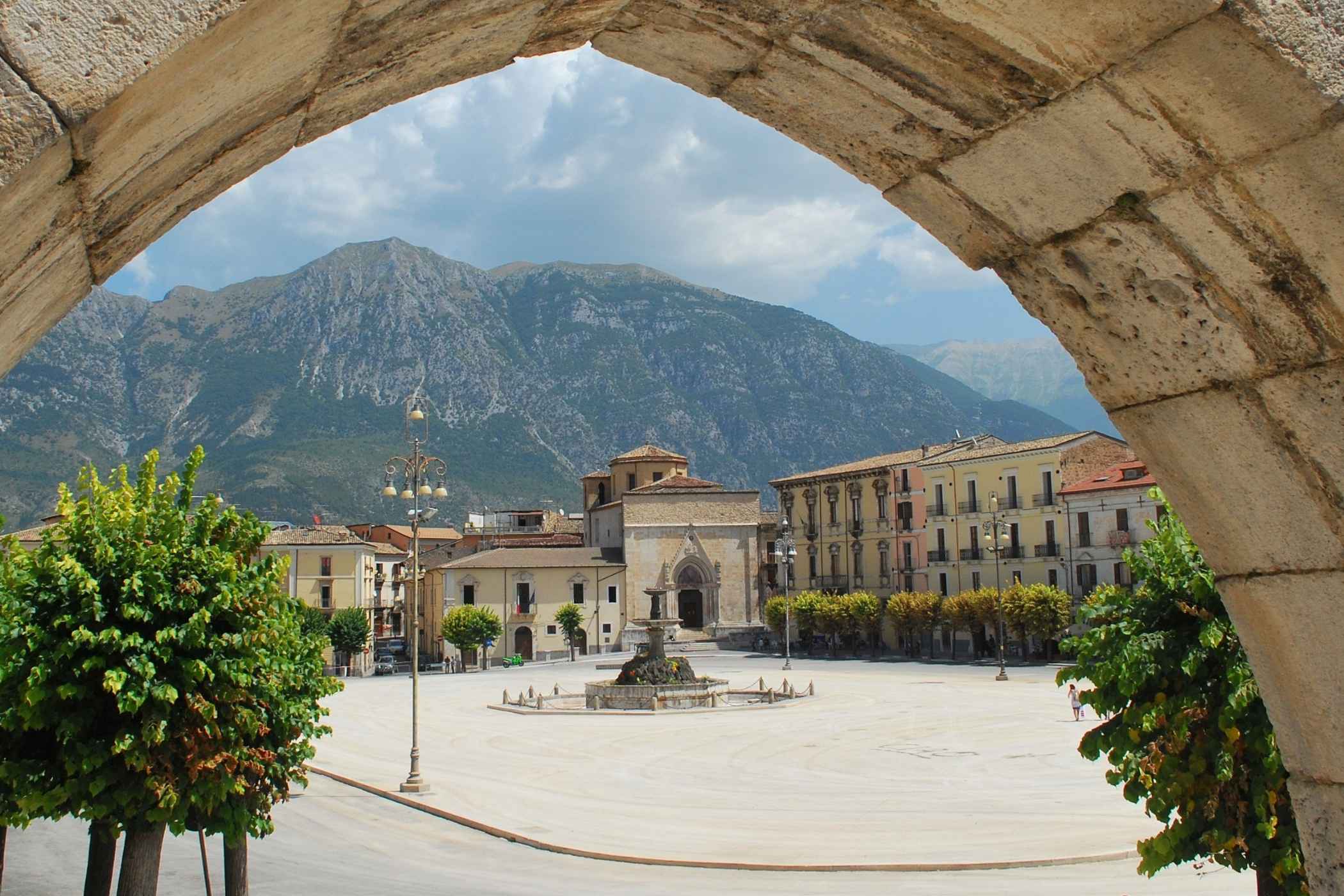
Once you have stepped off the wooden steps of the historic train in Sulmona, leave the tracks behind for a short walk into the historic center to discover the monumental Complex of Annunziata and the Medieval Aqueduct.
Instead of looking at standard town structures, head to the heart of the city to marvel at the breathtaking 13th-century Gothic aqueduct that sweeps across Piazza Garibaldi with its 21 massive pointed stone arches. Right next to it sits the Palazzo dell'Annunziata, a spectacular architectural masterpiece blending Gothic and Renaissance styles, which houses a beautiful civic museum. Walking along the shadow of these towering stone arches – which still stand perfectly intact after centuries of Apennine earthquakes – offers a wonderfully grand, artistic break from the wilderness tracks. It rewards travelers with a taste of the sophisticated Roman and medieval history hidden inside this mountain stronghold.
