

What You Need to Know: Useful Information
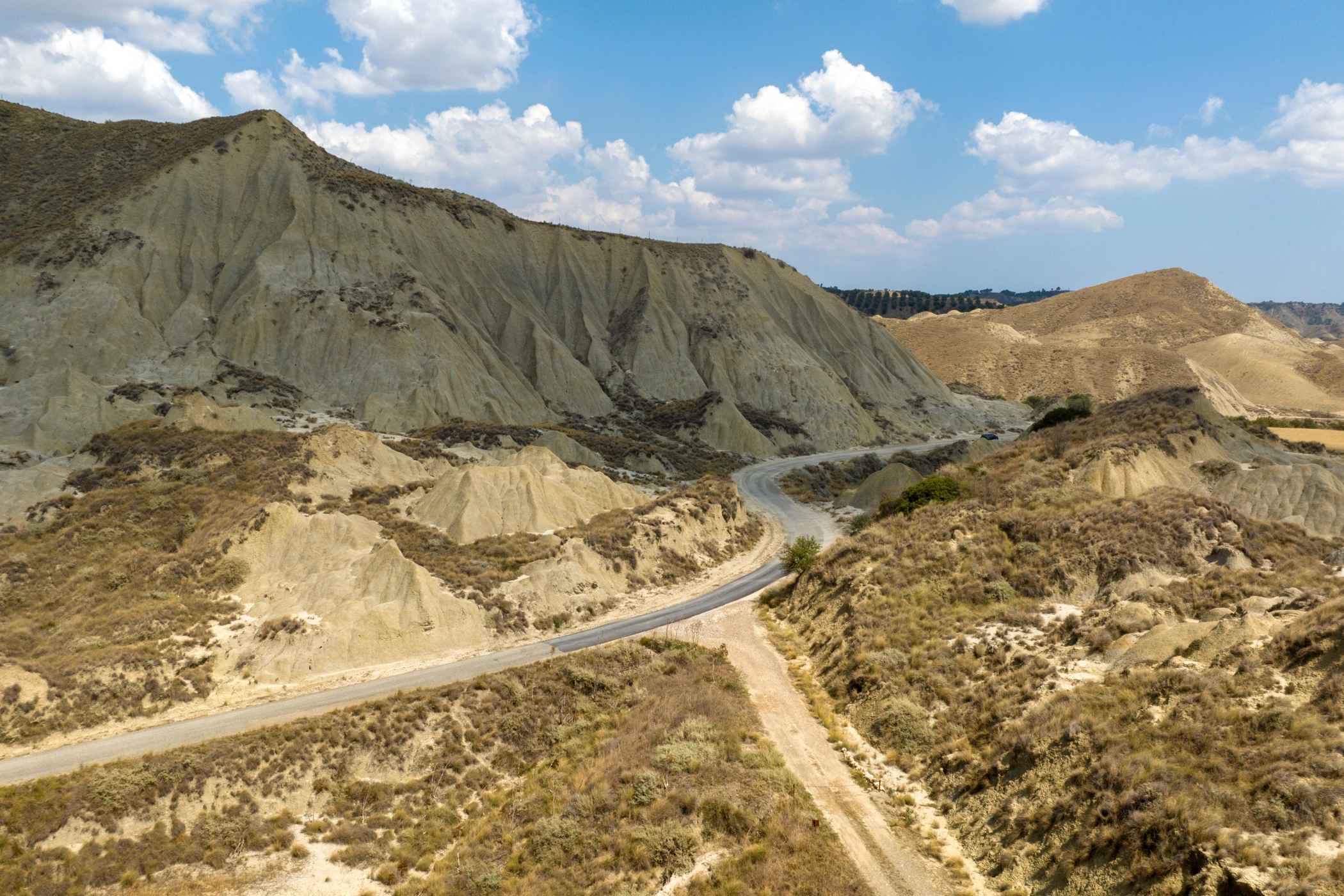
The Lucanian calanchi are natural formations characteristic of the Basilicata region in southern Italy, easily recognizable by the deep incisions in the clayey soil that create evocative, almost lunar landscapes. These dramatic furrows, formed by thousands of years of water erosion, give rise to a network of narrow, steep valleys, earning the calanchi the descriptive nickname of “clay canyons”. The reddish color and soft texture of the clay give these formations a unique and fascinating appearance, creating natural scenery of great visual impact.
Despite their exceptional beauty and uniqueness, the badlands of Basilicata are little known and often overlooked, remaining a sort of hidden treasure in the Italian natural landscape. This relative lack of notoriety makes visiting them even more special for those seeking authentic places, completely immersed in tranquillity and located far from mass tourism.
Getting There
By train
To get close to the badlands district by rail, you can take a regional train to the Ferrandina-Scalo railway station or the main Matera Centrale station. Because these vast clay formations stretch across open rural territory, you will need to continue your journey from the train terminal by renting a vehicle or checking local regional bus routes to reach the trailheads.
By car
The easiest way to reach the badlands is by car, driving to nearby towns such as Montalbano Jonico, Aliano, Tursi, or Pisticci, from where you can follow the signs for the protected natural areas. The regional roads are generally easy to navigate, although a suitable vehicle is highly recommended for venturing onto the less-traveled gravel paths that cut deeper into the formations.
By bus
Alternatively, you can use public transport to reach the area. Regional buses connect the larger hubs of Matera or Potenza directly to the neighboring provincial towns. However, these connections may be limited depending on the day, so it is necessary to plan your travel schedule carefully ahead of time.
Below you'll find the location marked on Google Maps. Click on it to open the location directly on your device's maps.
Useful Contacts
- APT Basilicata – Agenzia di Promozione Territoriale (Regional Tourism Board):
- Website: basilicataturistica.it
- Riserva Naturale Orientata dei Calanchi di Montalbano Jonico (Montalbano Badlands Reserve Office):
- Website: parchibasilicata.it
- Parco Letterario Carlo Levi (Aliano Badlands Visitor Information):
- Website: parcolevi.it
What to Bring & Pro Tips
- Lace up a pair of sturdy hiking boots with excellent grip before heading out, as walking along these trails means navigating a clay soil that can become incredibly slippery.
- Pack plenty of drinking water and apply high-SPF sunscreen before your trek, as the open canyon exposure to the sun is high throughout the day.
- Bring a smartphone or a camera to capture the unique morphology of the landscape and the impressive clay spires and pinnacles from different angles.
- Put a light windbreaker or a dust scarf in your backpack, as the wide-open valleys can become quite breezy and kick up fine clay dust.
- Keep in mind that exploring on foot along the well-marked hiking trails allows you to immerse yourself completely in the wilderness and appreciate the local flora up close.
- Check the local weather forecast before departing, and entirely avoid hiking directly on the clay paths during or immediately after heavy rainfall, as the trails quickly turn into thick, unnavigable mud.
The “Hidden Gem”
Once you have finished hiking through the dramatic clay valleys and photographing the towering pinnacles, take a short drive to explore the hauntingly beautiful Rabatana district in Tursi.
Instead of staying entirely out in the unpopulated nature reserves, head to the historic town of Tursi to discover its oldest, semi-abandoned hillside quarter. Founded by the Saracens in the 5th century, the Rabatana is completely surrounded by deep, precipitous calanchi ravines that act as a spectacular natural defense. Walk up the monumental stone staircase known as the Piccicacco to wander through a labyrinth of narrow, crumbling stone alleys, ancient cave dwellings, and historical arches that feel completely frozen in time. Exploring this quiet, cliffside stone village at dusk offers a wonderfully mysterious and poetic cultural break, rewarding travelers with a profound look at how human history and the wild, eroding badlands have lived side by side for over a thousand years.
