

What You Need to Know: Useful Information
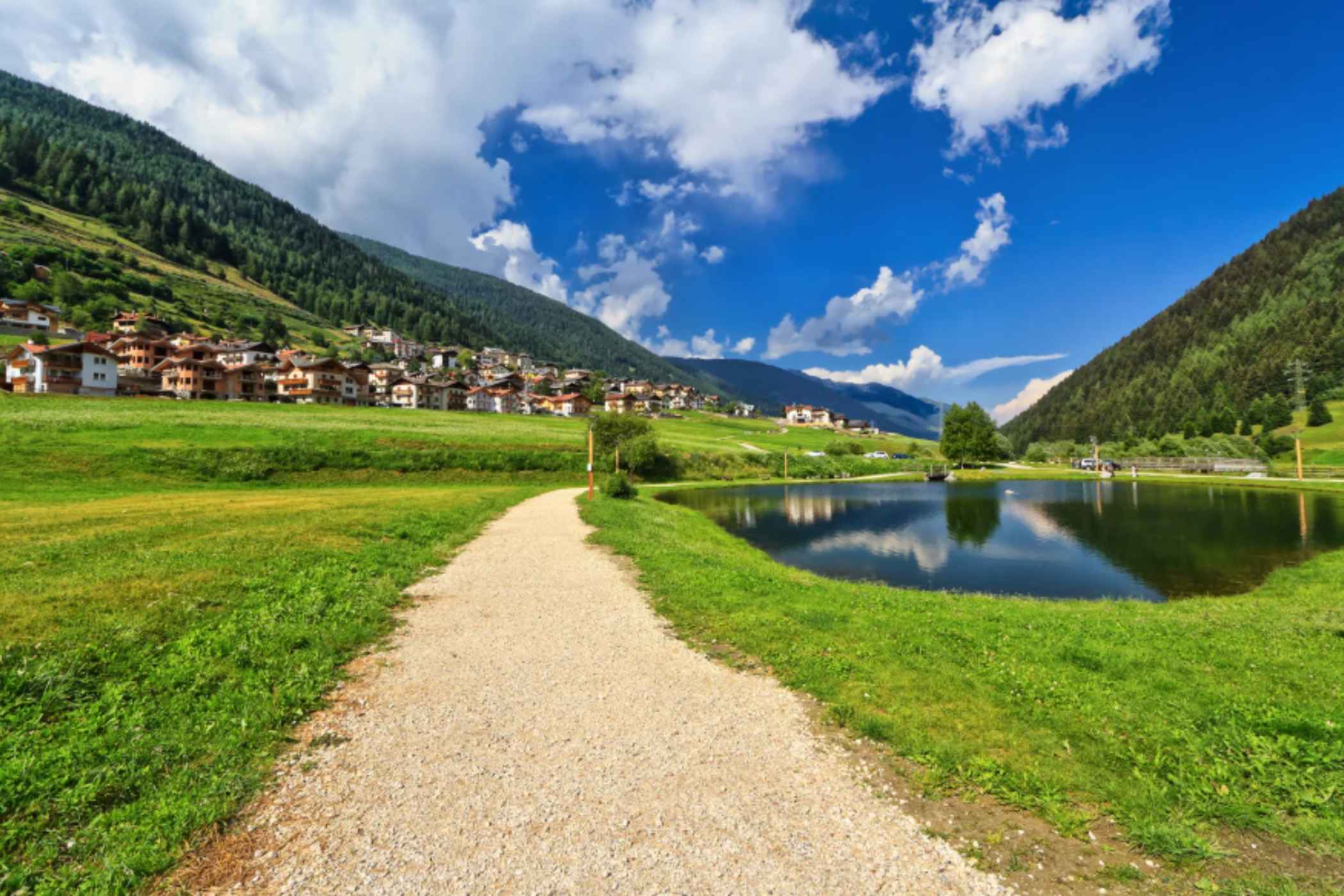
Nestled like a green jewel between the jagged, pale peaks of the Brenta Dolomites and the towering glaciers of the Rhaetian Alps, Val di Sole (the “Valley of the Sun“) lives up to its radiant name. Carved out over millennia by the rushing, turquoise waters of the Noce River, this breathtaking alpine valley in western Trentino is a paradise for outdoor adventurers. While it is world-renowned for its winter ski slopes and white-water rafting, autumn and summer bring a slower, deeply peaceful way to experience its wild heart: on horseback. Trekking through the valley on horseback lets you step off the busy hiking trails and slip effortlessly into dense larch forests, alpine meadows, and quiet riverside paths.
Getting There
By Train (The Green Option):
Val di Sole is uniquely accessible by rail thanks to the Dolomiti Express. Take a regular train to the city of Trento, and right inside the same station, transfer to the narrow-gauge Trento-Malè-Mezzana line. This scenic little train climbs straight up into the valley, stopping at primary hubs like Folgarida, Dimaro, and Marilleva, often just a short walk from local riding stables.
By Car:
From the A22 Brennero Highway, take the San Michele all’Adige exit. Follow the SS43 through the Val di Non, and then merge onto the SS42, which runs horizontally all the way through Val di Sole. The drive from Trento takes about 1 hour.
By Plane:
The closest international gateways are the Verona Villafranca Airport (approx. 2 hours away by car) and Bergamo Airport.
Below you’ll find the location marked on Google Maps. Click on it to open the location directly on your device’s maps.
Useful Contacts
- Val di Sole Tourism Board Official Infopoint: +39 0463 901280 | [email protected]
The “Hidden Gem“
After exploring the wild trails on horseback, a visit to the imposing Castel Caldes offers a fascinating journey into the valley’s noble past. This majestic fortress, standing at the entrance of Val di Sole, is a stunning example of medieval and Renaissance architecture blended with alpine charm. Inside, visitors can admire beautifully frescoed rooms and the legendary “Countess’s Tower“, where history and local myths intertwine. The castle also serves as a vibrant cultural hub, frequently hosting international art exhibitions and classical music concerts in its silent halls. It is the perfect cultural destination to complement the natural beauty and rugged spirit of the surrounding mountains.
