

What You Need to Know: Useful Information
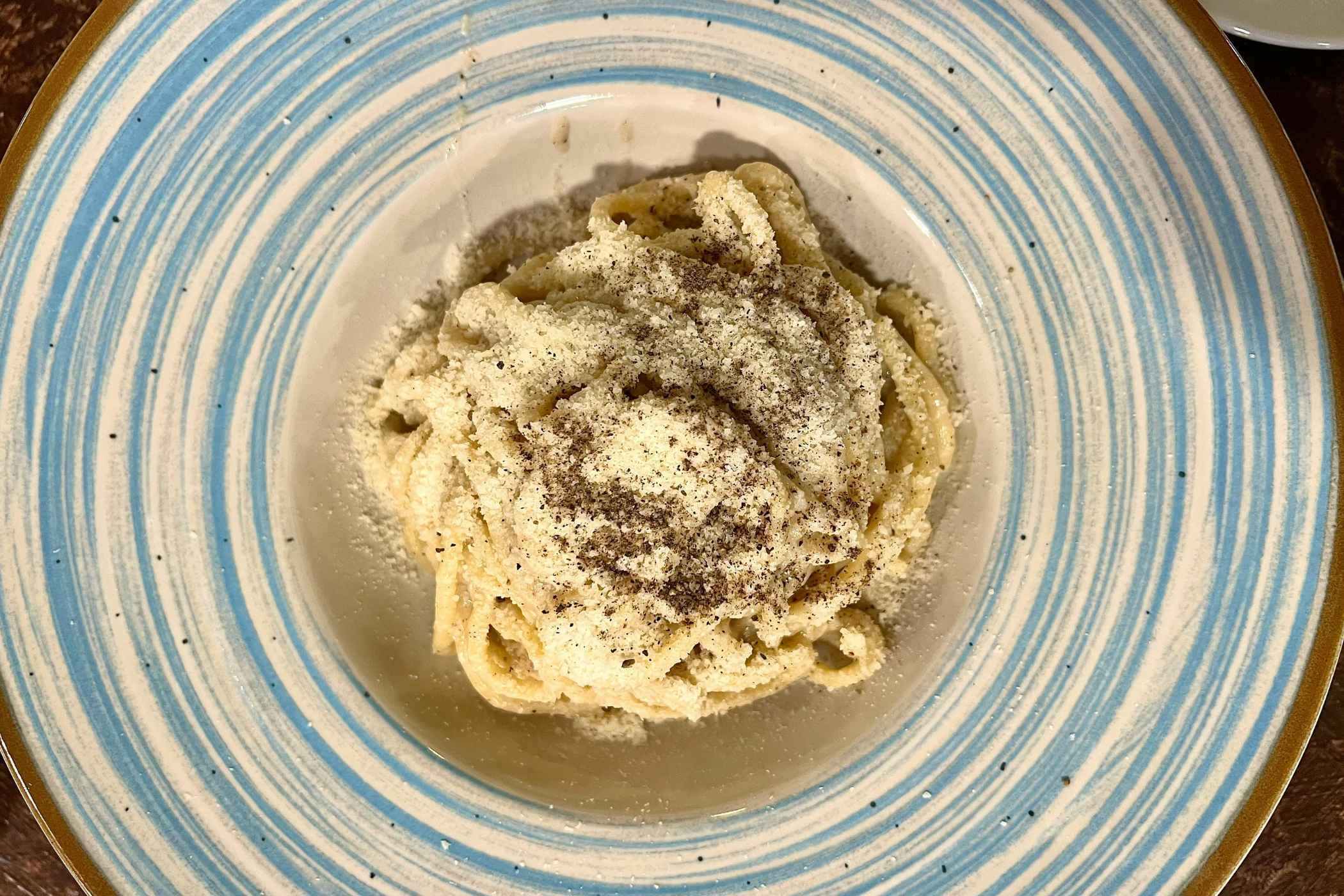
Pecorino Romano is one of Italy’s oldest and most renowned cheeses, famous for its strong, savory, and slightly spicy taste. This hard cheese is made exclusively from sheep’s milk. Lazio has many historic dairies that still produce Pecorino Romano using traditional methods that follow DOP (Protected Designation of Origin) rules. The production begins with fresh sheep’s milk coagulated with rennet, which is then finely broken and cooked at precise temperatures to obtain a compact paste. After dry salting, the cheese is aged for at least 5 months, although the process can last up to 8 months or more for a more intense and full-bodied flavor. Pecorino Romano is famous for its role in cooking, especially in classic dishes like Pasta alla Carbonara, Amatriciana, and Cacio e pepe. Traditional Roman dishes are enhanced by this cheese, and many dairies in Lazio offer tours of their facilities to discover the cheese-making process up close and taste Pecorino Romano in various stages of aging.
Getting There
By train
To visit the historic agricultural regions where Pecorino Romano dairies thrive, you can take a regional Trenitalia train from Rome directly to stations like Frosinone, Rieti, or Viterbo. From these provincial rail hubs, local suburban buses connect you directly to the rural countryside and dairy facilities.
By car
Driving is the most practical way to explore the scattered country dairies at your own pace. From Rome, you can easily hop onto the A1 highway (Autostrada del Sole) heading north toward the Sabina hills or south toward the Ciociaria region, following local provincial roads (strade provinciali) to reach the farms.
By bus
For regional public transit travelers, COTRAL regional buses run extensive daily networks connecting the main transit terminals of Rome (such as Ponte Mammolo, Anagnina, or Saxa Rubra) directly to the smaller rural villages across Lazio where traditional cheese production takes place.
Useful Contacts
- Ufficio Turistico Regionale Visit Lazio (Lazio Main Tourism Information Hub): +39 06 516811 | [email protected]
What to Bring & Pro Tips
- Because many dairies in Lazio offer tours of their facilities to view the production up close, it is highly recommended to call or email the farms in advance to book a guided visit, especially if you want to align your trip with the morning milking and curd-breaking schedules.
- You will be walking through active food production areas and damp aging cellars, so make sure to wear comfortable, flat, closed-toe walking shoes with slip-resistant soles.
- The climate-controlled aging rooms are kept consistently cool and humid to help the cheese develop its intense and full-bodied flavor, so packing a light jacket or sweater is a smart idea even during a hot summer visit.
- If you plan to purchase fresh wedges during your tasting, bring a small insulated cooler bag with ice packs to keep your savory souvenirs fresh during the journey back to your hotel.
The “Hidden Gem”
To truly appreciate the deep heritage of this legendary cheese, a visit to the ancient city of Viterbo, located in the heart of Lazio’s historic pastoral lands, is a must. Known as the “City of the Popes“, its beautifully preserved medieval quarter, San Pellegrino, transports visitors back to the 13th century with its atmospheric stone alleys and grand aristocratic palaces. The city is also famous for its monumental fountains and the majestic Palazzo dei Papi, which hosted the longest papal election in history. Exploring these historic streets perfectly complements a day spent touring nearby traditional dairies and tasting aged Pecorino Romano.
