

What You Need to Know: Useful Information
The Lao River is one of the most fascinating and evocative waterways in southern Italy. It originates on the Pollino plateau, one of the most important and protected mountainous areas in Italy, and flows through spectacular gorges and canyons that make this area entirely unique in terms of landscape and nature. The Lao Gorges, a natural heritage site of great value, offer an unspoiled environment where flora and fauna thrive, offering breathtaking views and direct contact with nature.
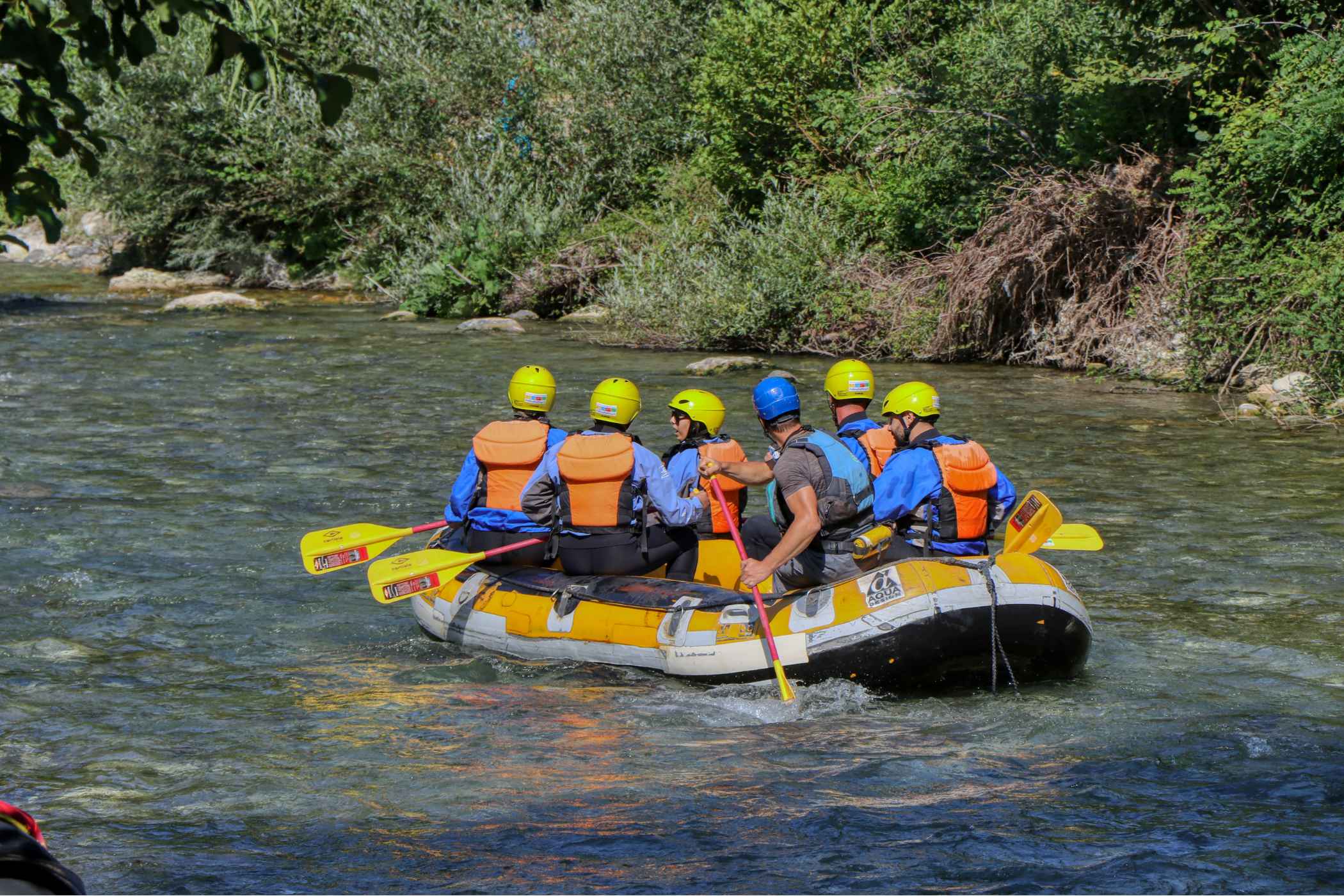
The river flows for about 50 kilometers before emptying into the Tyrrhenian Sea. Along its course, it crosses the Pollino National Park, Italy’s largest national park, which is characterized by mountainous landscapes, dense forests, and crystal-clear waters. This makes the Lao an ideal destination for those who love outdoor activities and want to experience an authentic immersion in nature. For adventure lovers, rafting on the Lao River is one of the most exciting and recommended experiences. The rapids and more turbulent stretches of the river offer a perfect mix of adrenaline and fun, suitable for both beginners and experts.
Getting There
By train
To reach the gateway communities of the Pollino National Park by rail, you can take a regional Trenitalia train along the Tyrrhenian line directly to the Scalea-Santa Domenica Talao railway station. Because the deep gorges are located up in the mountainous interior, you will need to continue your journey from the coastal station by renting a vehicle or booking a shuttle connection through a local rafting center.
By car
Driving is the most practical way to reach the various outdoor sports centers nestled in the valley. From the north or south, take the A2 Autostrada del Mediterraneo (Salerno-Reggio Calabria) highway, exit at Laino Borgo or Campotenese, and follow the provincial road signs directly into the valley communities of Laino Borgo or Papasidero, which serve as the primary bases for river descents.
By bus
For regional public transit travelers, private and regional bus networks operate daily routes connecting the city hubs of Cosenza or Castrovillari to the smaller hillside villages within the park boundaries. These buses stop in the main town squares, where local adventure guides can arrange terminal pickups.
Useful Contacts
- Ente Parco Nazionale del Pollino (Pollino National Park Headquarters):
- Website: parconazionalepollino.it
- Comune di Papasidero (Valley Base Tourist Information):
- Website: comune.papasidero.cs.it
- Turismo Calabria (Calabria Regional Tourism Board Portal):
- Website: turismocalabria.it
What to Bring & Pro Tips
- Secure your rafting excursion reservation ahead of time, as these guided river descents are highly popular and require small group coordination to match everyone with the appropriate gear.
- Pack a swimsuit and a synthetic thermal rash guard or t-shirt to wear underneath the protective neoprene wetsuit provided by your rafting outfitters.
- Bring a pair of athletic sneakers or water shoes that can get completely wet, as you will need sturdy footwear with good traction to step securely inside the rubber dinghies.
- Put a dry change of clothes, a towel, and a bag for your wet gear in your vehicle, allowing you to dry off comfortably at the base camp after the river trip.
- Keep in mind that rafting on the Lao is an activity that can be enjoyed from spring to late autumn, thanks to the exceptionally mild climate of the area.
- Look into alternative outdoor sports if you want to see the canyon from different perspectives, as other activities such as canyoning, river trekking, and packrafting can also be enjoyed along the river.
The “Hidden Gem”
Once you have finished riding the rapids and exploring the spectacular rock canyons of the river, take a short drive to visit the extraordinary Grotta del Romito (Romito Cave) near Papasidero.
Instead of staying entirely focused on modern watersports, head just a few kilometers outside the village of Papasidero to discover one of the most important Paleolithic prehistoric sites in Europe. Hidden inside a quiet, forested limestone ravine, this ancient rock shelter features a breathtaking, 11,000-year-old rock engraving of a prehistoric bull (Bos primigenius), masterfully carved into a massive stone block with incredible artistic precision. The site also includes ancient burial grounds where archaeologists uncovered the remains of Cro-Magnon hunter-gatherers who lived here during the last Ice Age. Walking through this quiet, shaded archaeological sanctuary offers a wonderfully mysterious and awe-inspiring historical break, rewarding travelers with a profound look at the earliest human communities to hunt and live along the banks of the Lao River thousands of years ago.
