

What You Need to Know: Useful Information
Catania, a city nestled at the foot of Mount Etna on the eastern coast of Sicily, is an important historical and cultural center in Italy. Its location on the Ionian Sea and the ever-menacing profile of the volcano provide the backdrop for strong and deeply rooted traditions, the most heartfelt of which is the feast of Saint Agatha. The feast of Saint Agatha, patron saint of Catania, is celebrated every year between February 3 and 5 and is an event that powerfully combines faith, history, and civic identity.
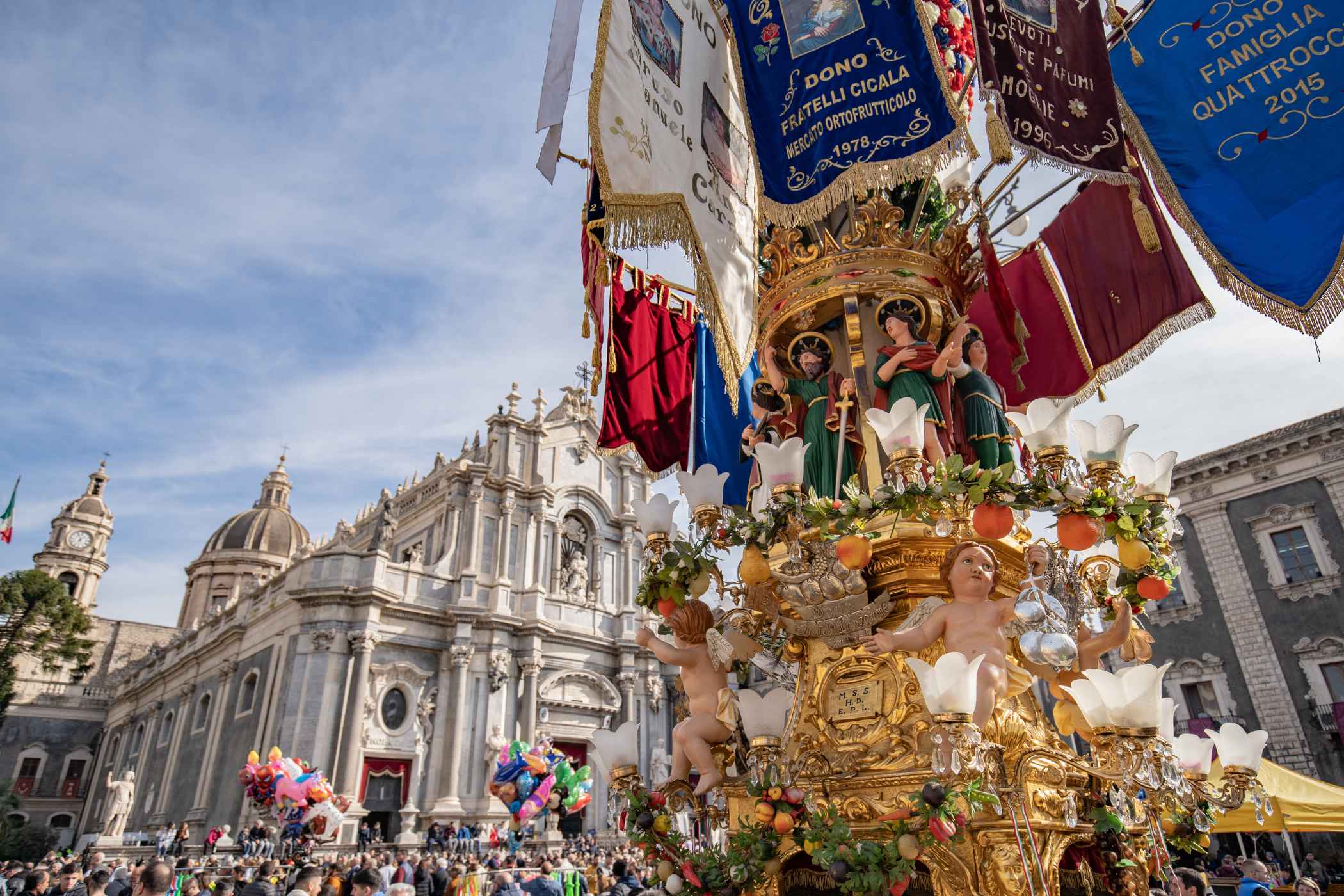
The celebrations have ancient origins: they commemorate the martyrdom of the young Agatha and the preservation of her relics, which for centuries have been a symbol of protection for the inhabitants. Popular devotion is expressed through massive processions, religious rites, and community events involving thousands of people, both residents and visitors. The uniqueness of the festival lies in the extraordinary fusion of the sacred and the profane. At the center is the “vara”, the imposing reliquary containing the saint's remains. Carried on the shoulders of devotees, it travels through the main streets of the city amid songs, prayers, and the offering of candles by the various guilds.
Getting There
By train
To reach the heart of the celebrations by rail, you can take a regional or high-speed Trenitalia train directly to the Catania Centrale railway station. The station is situated right near the city center, allowing you to easily dive straight into the procession routes and festive streets on foot.
By car
Driving directly into Catania during the festival requires careful planning due to extensive street closures. From Messina or Syracuse, take the A18 highway, or from Palermo, take the A19 highway toward Catania. It is highly recommended to leave your vehicle in one of the large park-and-ride commuter lots on the outskirts of the city and use public transit to reach the center.
By bus
For regional public transit travelers, long-distance and intercity bus networks run frequent daily schedules from Catania Airport and other Sicilian cities straight to the central bus terminal at Via Archimede. From there, the main festival squares are just a short walk away.
Below you'll find the location marked on Google Maps. Click on it to open the location directly on your device's maps.
Useful Contacts
- Comune di Catania – Ufficio Turismo (Catania Municipal Tourism Office):
- Website: comune.catania.it
- Arcidiocesi di Catania (Catania Archdiocese – Official Feast Programme):
- Website: diocesidictania.it
- Sicilia Turismo (Sicily Regional Tourism Board Portal):
- Website: visitsicily.info
What to Bring & Pro Tips
- Plan your trip and accommodation well in advance, as this world-famous event attracts thousands of tourists and devotees, filling up local hotels quickly.
- Keep an eye out for the candelore, which are large decorated candles. Each one represents a professional category and is paraded proudly through the streets accompanied by lively bands and choreographed dances.
- Wear comfortable walking shoes with excellent grip, as you will be standing and walking for long hours on Catania's historic lava stone streets alongside massive crowds.
- Bring a smartphone or camera to capture the vibrant atmosphere, the majestic processions of the “vara”, and the spectacular fireworks displays that light up the city.
- Dress in warm layers, as the festivities run late into the winter evenings and early mornings between February 3 and 5.
- Make sure to visit local pastry shops and stalls to taste traditional sweets, especially the cassatella di Sant'Agata (traditionally shaped like a breast to honor the saint), allowing you to fully experience this collective celebration.
The “Hidden Gem”
Once you have witnessed the energy of the candelore dances and the grand processions through the main avenues, take a short walk to find the Monastero dei Benedettini di San Nicolò l'Arena (Benedictine Monastery).
Instead of staying entirely mixed into the crowded street processions, head just a few blocks west of the main cathedral to explore one of the largest Benedictine monastery complexes in Europe and a stunning UNESCO World Heritage Site. This monumental jewel is a masterclass in Late Baroque architecture, featuring breathtaking cloisters, a majestic hanging garden, and incredible cellars where old Roman structures meet centuries of solidified volcanic Etna lava flows. Walking through its quiet, vast corridors and ornate marble staircases offers a wonderfully grand, peaceful, and awe-inspiring cultural break, rewarding travelers with a profound look at the deep spiritual, architectural, and historical layers that have shaped Catania's identity over the centuries.
